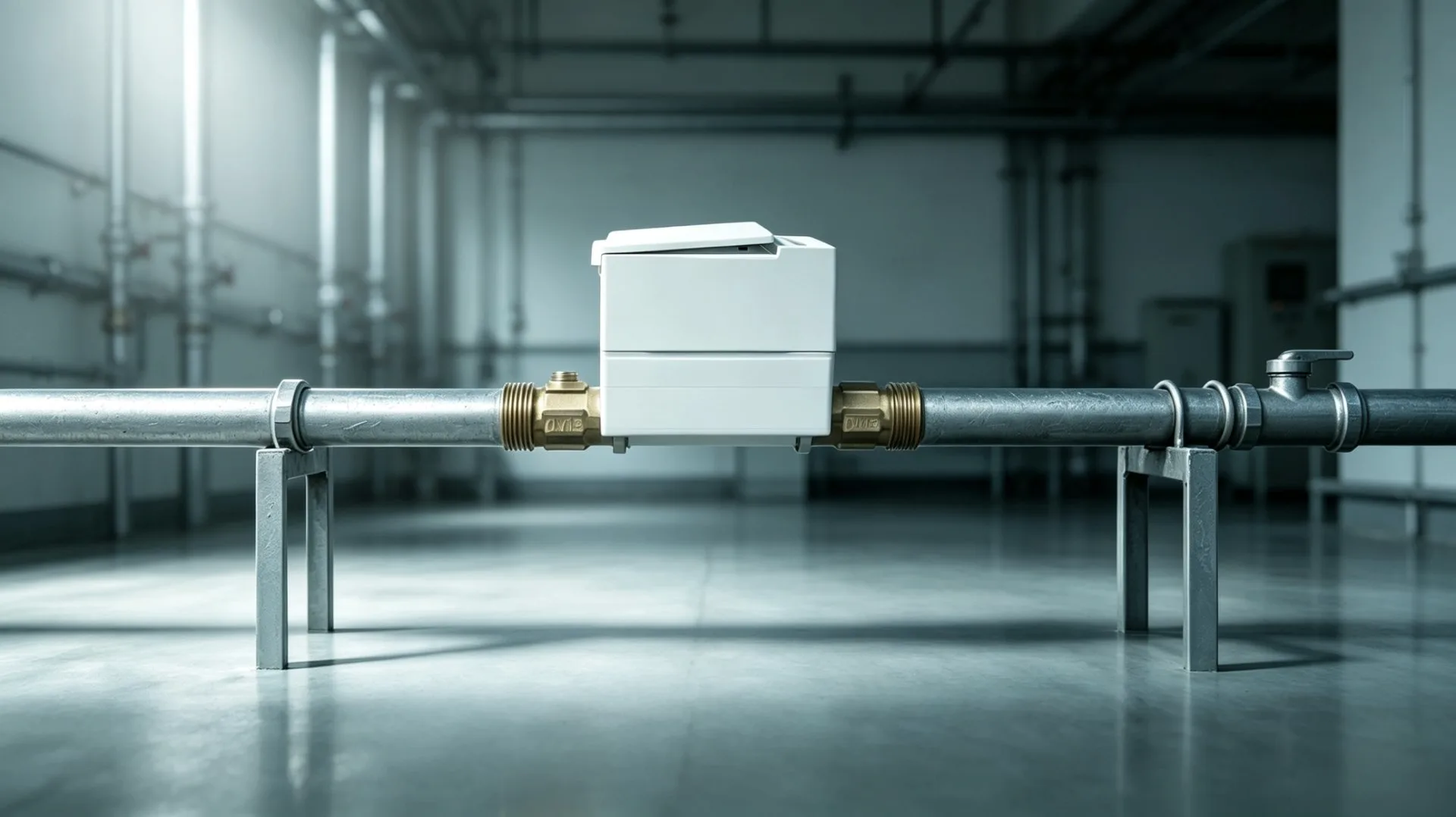

The water you treat is not the water you bill. The difference starts where the water is measured: a flow too small to count, a body that jams, a reading nobody checks.
Mains bursts are the network’s problem and we do not claim them. These three happen at the meter, and a metering programme can close them. The data it produces can then enter the system you already run.
A leaking service line, a cistern that never stops filling, a night flow that runs for months. Below a mechanical meter’s starting flow it is not counted at all, so the loss is yours and the customer’s bill looks perfectly normal.
The meter keeps sampling while the flow stays small, so what used to be an unexplainable line loss becomes a night trend you can trace to a street, then to a connection. The trend goes straight into the revenue or network system.
Sand, scale and sediment jam a rotor; wear changes the reading a little every year. The meter still turns, still reports, still passes a visual inspection — and has been quietly wrong for most of its life.
Debris passes through instead of seizing the meter, and there is no mechanical wear to drift the reading. The meter you install in year one is the meter you still have in year ten, on the same reference.
A magnet held against the body, a meter turned around, a pit under water after every storm. Each one is revenue lost and a replacement visit nobody planned — on top of the reading you will never recover.
Force leaves a trail. A magnetic attempt, a reversed body or a flooded pit is logged as a dated event, so a suspicious reading arrives as evidence rather than suspicion — and the sealed body keeps reading through the flood instead of being written off.
No rotor to jam, no chamber to silt up — the reading starts at the first movement of water and never depends on something turning.
Small flows, reverse flow and interference are judged as the water passes, so the head-end receives a verdict instead of raw numbers to interpret.
Accuracy you can put in front of an auditor or a regulator — a record per meter, not a batch certificate.
Service connections, the loss you already suspect, and the system that data sits in today are what set the size of a pilot zone. The data it produces then decides.
Pilot zone first · evidence pack before payment · approval route mapped per market.