

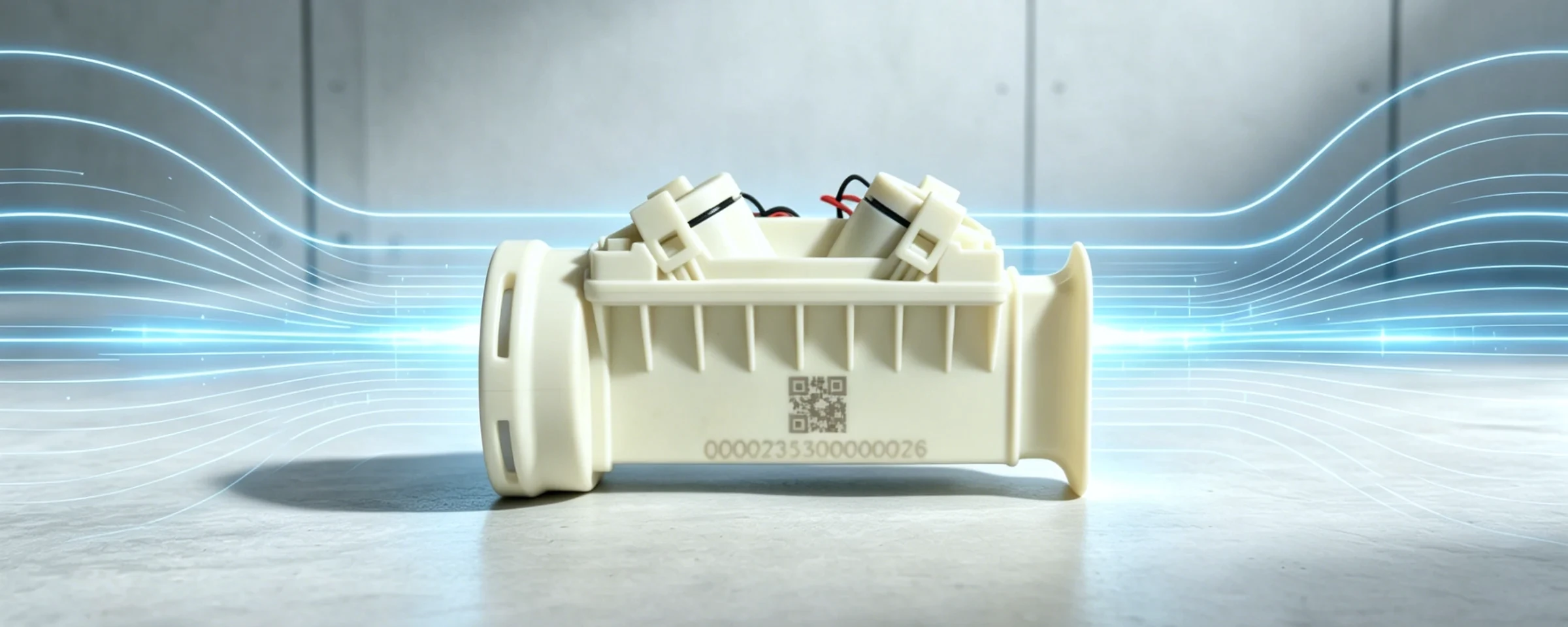
Technology

On this page Why ultrasonic In the field Before release
Why ultrasonic

The principle is settled.
The execution is not.

Time-of-flight measurement is what every ultrasonic meter shares — no rotor, no chamber, nothing in the water to wear out. That part is physics, and physics is not where meters differ.

Where they differ is the execution: how precisely the transit time is captured, how the transducer pair is matched, and how calibration stays honest over years of service. That is the part we own — the timing circuit, the firmware and the matching discipline are all ours, developed and tuned in this building.
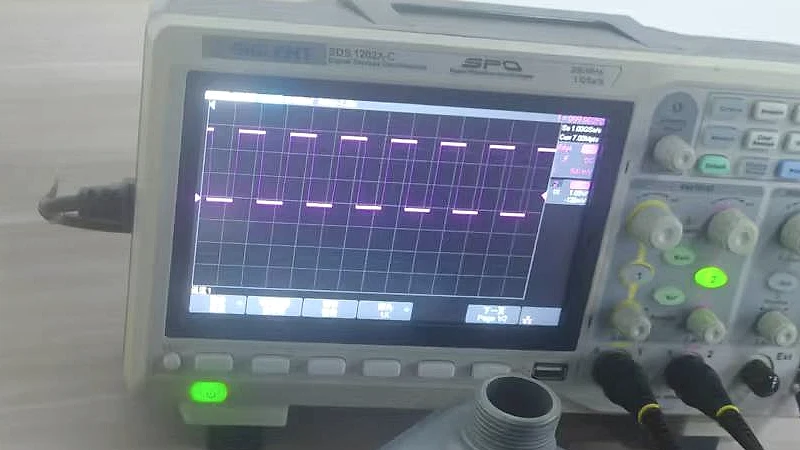
Oscilloscope capture of the ultrasonic transducer echo, measured at the Heyisens bench

The transducer echo, captured live on our bench. Timing this pulse precisely is the whole meter.
In the field

Designed for bad days.

Empty pipe or an air pocket
Flagged as empty pipe — never counted as water.
Reverse flow
Measured and recorded as its own event.
Night flow, near Qmin
Small continuous leaks stay visible on the trend.
Fouling on the liner
Fouling shows up as a trend, not a frozen dial.
Magnetic tampering
Changes nothing — and the attempt is logged with its date.
Any installation angle
U0 / D0 — no straight pipe required.
Loss of the radio link
Readings stay in memory and backfill when it returns.
Before release

Two checks on every meter.
One proof per model.

On every single unit
Flow calibration
Seal and pressure test
Once per model, before the first order
Temperature and humidity cycling
Immersion soak, IP68
Salt-spray exposure
Long-run endurance
Granted patents
Anti-tamperAnti-foulingTransducer seatSealed controllerOvermould housing
How every single unit is tested
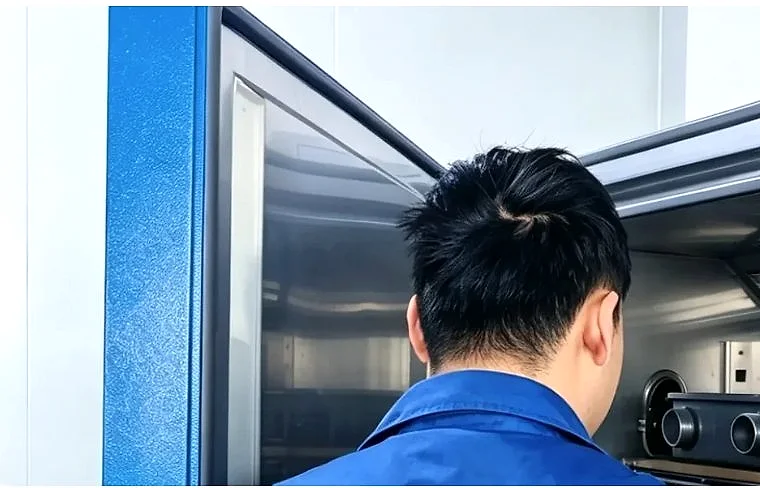
Operator loading a meter into the temperature and humidity chamber

Development validation, not the production line: the chamber a new model has to come out of intact.
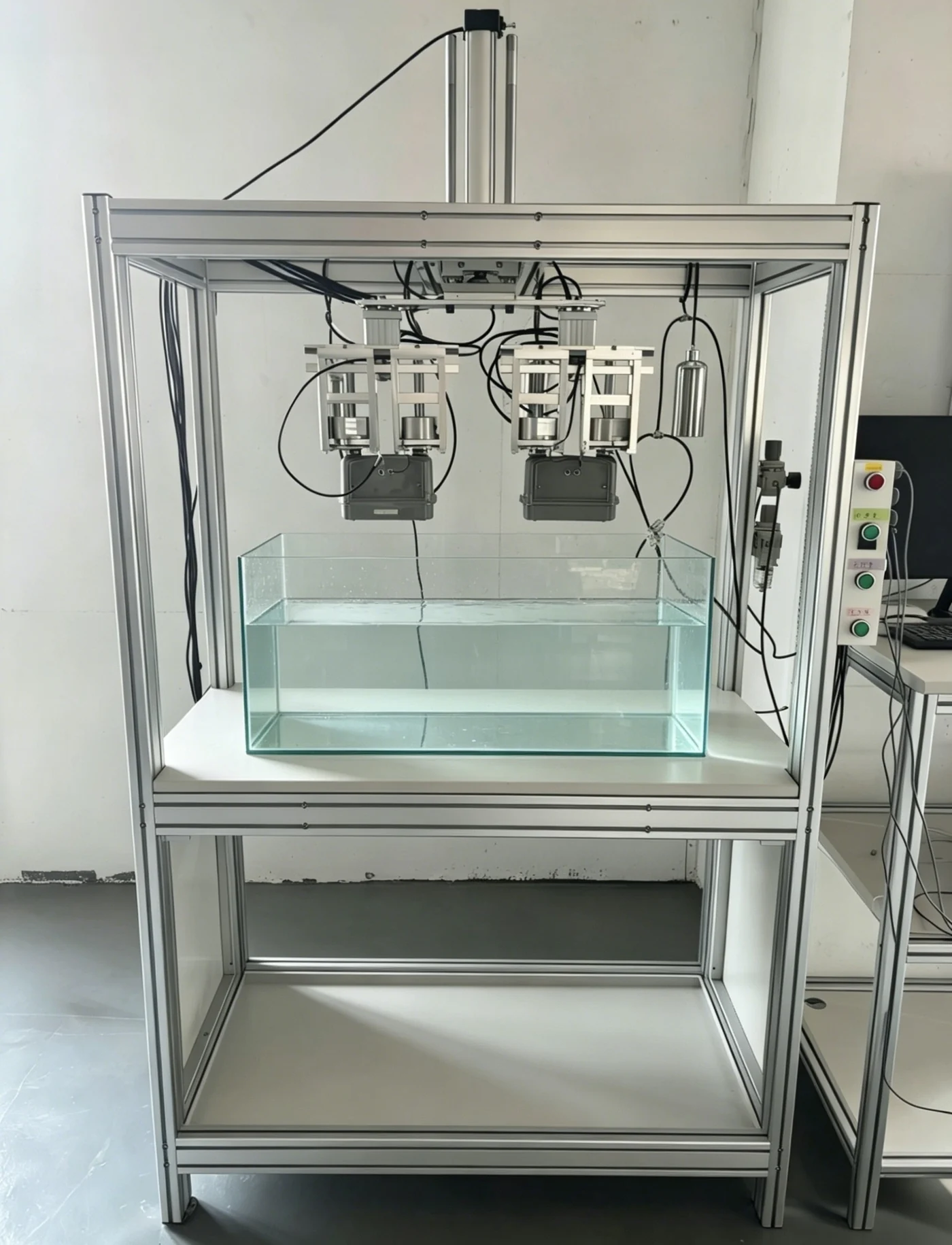
Immersion rig with meters suspended above the tank

The IP68 soak — meters held under water, then read. One of the per-model proofs.

Tell us your market.We will tell you what fits.

Standard products, OEM base meters, or a complete metering solution — send us your specification and we will work from what you actually need.